


Bruker Spatial Biology Blog
Biomarker Research MicroRNA Profiling
Webinar Recap: MicroRNA Profiling for Psychiatric Disease Biomarker Research
In this article: Summary Key Takeaways Best Practices and Key Learnings Summary: MicroRNAs can preserve useful biological information in challenging samples, including formalin-fixed paraffin-embedded brain tissue stored for decades. In…
Spatial Biology Spatial Proteomics
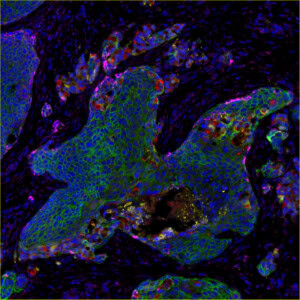
Spatial Proteomics for Biomarker Discovery and Validation
Proteins are the functional unit of biology. Nearly 90% of FDA-approved drugs target them1. Cell identity, immune phenotype, pathway activation, and disease state are defined at the protein level. And…
CosMx SMI
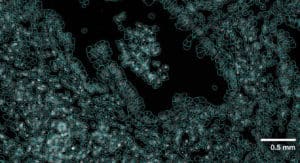
Accurate Cell Segmentation: The Critical Foundation of Spatial Biology
Authors: Kalyan Chavda, Lidan Wu, Aster Wardhani Spatial biology has entered the era of single-cell and subcellular resolution and generating high-dimensional molecular data is no longer the challenge. Interpreting it…

CosMx SMI
Key Considerations in High-Fidelity Spatial Transcriptomics with CosMx® SMI
Authors: Kalyan Chavda, Christine Kang, Martin Shelton, Prajan Divakar As spatial biology transitions into a foundational tool in scientific research, Core Lab Managers and Principal Investigators are faced with an…
CosMx SMI
How CosMx SMI Enables Next-Generation Spatially Resolved Cell Assays with Subcellular Resolution
The ability to simultaneously map morphology, RNA, and protein at the subcellular level is the new frontier in cell biology. While the CosMx® Spatial Molecular Imager (SMI) is renowned for…

Miscellaneous
January 2025 Newsletter
With AGBT 2025 right around the corner and exciting announcements from Bruker Spatial Biology coming, we’re here to bring you the latest updates, innovations, and resources in spatial biology. Upcoming…

CosMx SMI
Why Transcriptomics Matters: Understanding the Value of High-Resolution Spatial Molecular Imaging
As spatial biology reshapes the future of biomedical research, spatial transcriptomics has emerged as one of the most powerful tools for revealing complex tissue biology. Technologies like the CosMx® Spatial…
CosMx SMI
Tips to optimize the CosMx Multiomics sample prep for fragile tissues
Tips to optimize the CosMx Multiomics sample prep for fragile tissues The CosMx multiomics platform enables sequential protein and RNA analysis on the same tissue sample, combining a 64-plex protein…
Miscellaneous
Understanding Bulk Multiomics: A Technical Introduction
As multiomics becomes increasingly central to biological research and therapeutic development, scientists are seeking practical, scalable approaches to generate integrated datasets across molecular modalities. While single-cell multiomics and spatial multiomics…
Miscellaneous
October 2025 Newsletter
This month brings exciting milestones across our portfolio. Washington University School of Medicine’s Orr Lab has been named a Bruker Spatial Biology Center of Excellence, marking a new chapter in…
CosMx SMI
The CosMx SMI 2.0: Unmatched advances in single-cell spatial transcriptomics
Explore the CosMx SMI 2.0: Higher RNA sensitivity, whole transcriptome imaging, and faster high fidelity, subcellular spatial transcriptomics.
Miscellaneous
June 2025 Newsletter
We're excited to share a major step forward: the nCounter® platform is now enabling simplified RNA and protein analysis in a single workflow. Dive into our newest capabilities for bulk multiomics,…